
Valentine Riedo-Grimaudo, Janos Metzger, James Whitby, Lex Pillatsch
TOFWERK
Introduction to FIB-SEM and fibTOF
The integration of the fibTOF technology with a focused ion beam–scanning electron microscope (FIB-SEM) enables secondary ion mass spectrometry (SIMS) directly within the microscope. This significantly expands the analytical capabilities of these platforms. With this addition, users gain the ability to image light elements down to the nanometer scale, which is challenging using conventional techniques.
The fibTOF delivers real-time, 3D visualization of the spatial distribution of all elements, including hydrogen and lithium, as the sample is milled by the FIB. This combination of high spatial resolution and sensitivity opens new avenues for advanced materials characterization. As a result, the fibTOF has become a powerful tool in diverse application areas such as materials science, the semiconductor industry, failure analysis, and nanotechnology.
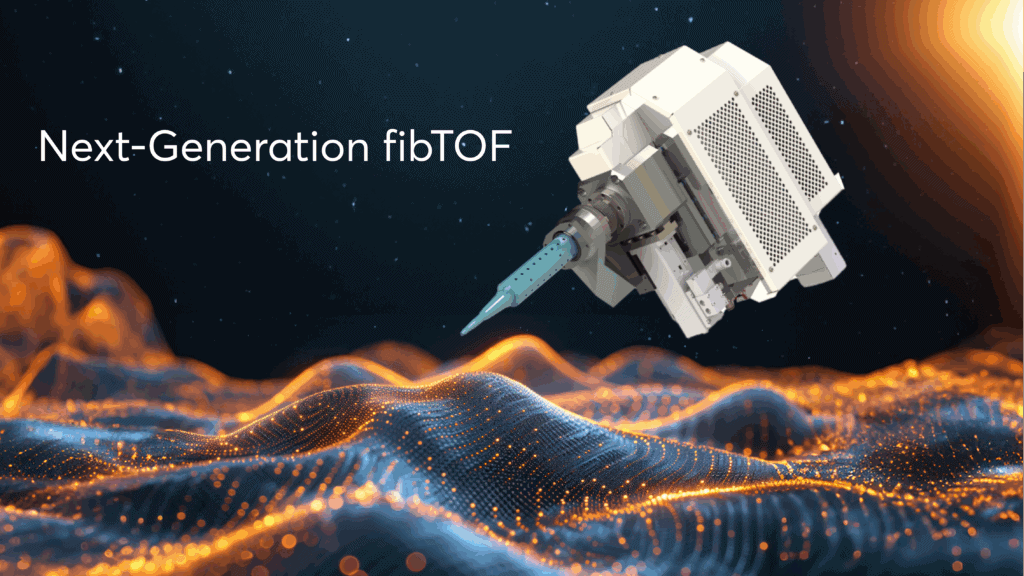
Next-Generation fibTOF
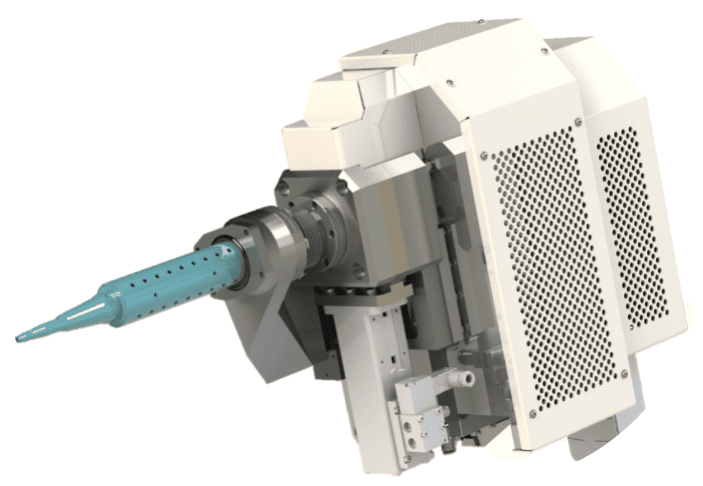
The TOFWERK next- generation fibTOF (Figure 1) introduces several important advancements:
- improved electronics
- a new acquisition system
- a new state machine
- a new unified software platform
Electronics
The next-generation fibTOF features enhanced electronic components designed to comply with stringent electromagnetic compatibility (EMC) safety standards. Improved EMC shielding ensures stable signal acquisition and reliable operation, thereby improving overall system robustness and operational safety.
Acquisition
The next-generation fibTOF acquisition system is based on an analog-to-digital converter (ADQ), overcoming the limitations of traditional pulse-counting approaches.
ADQ systems are advanced data acquisition platforms designed for high-performance signal recording, offering increased sensitivity and the ability to capture stronger signals, often by an order of magnitude.
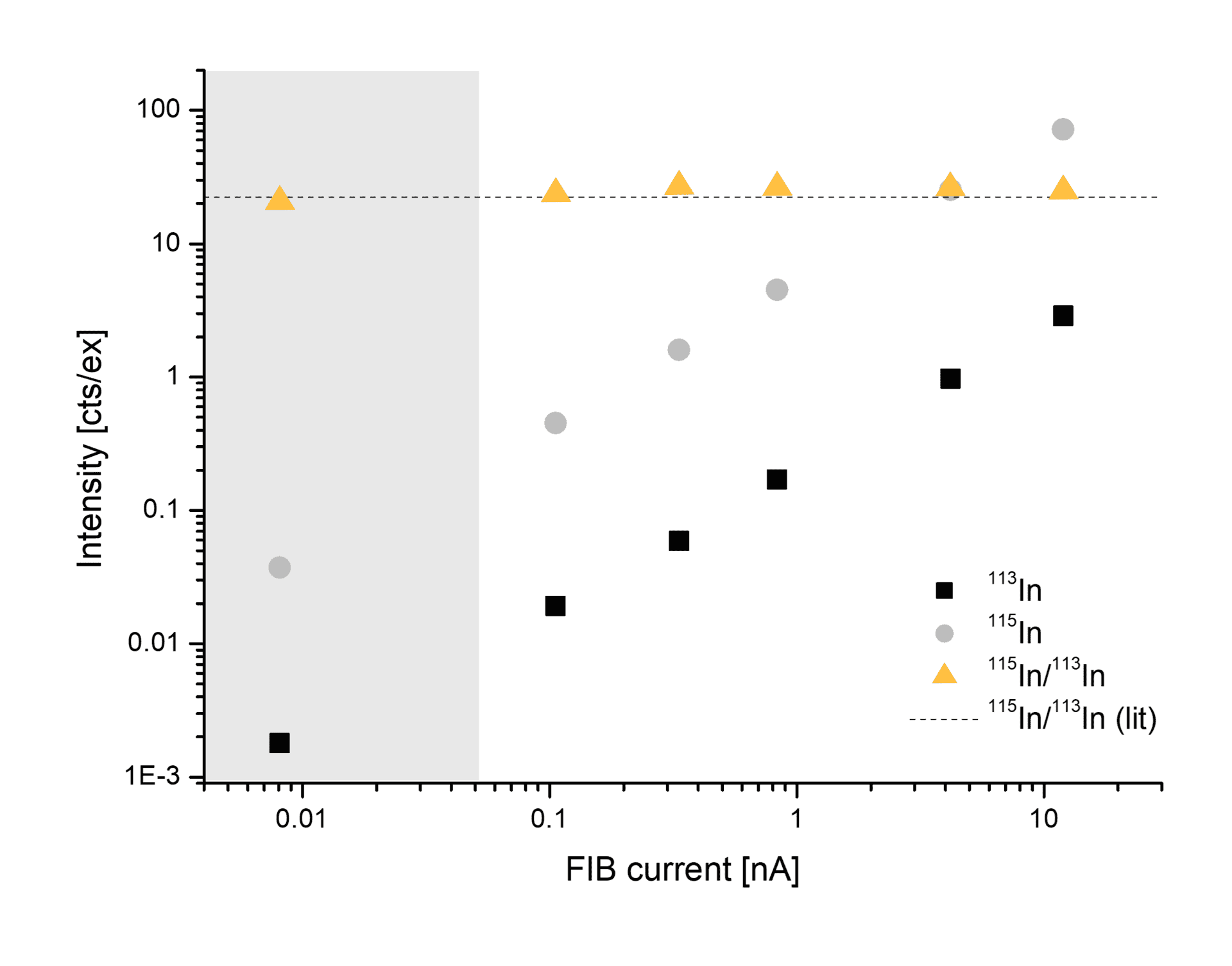
The ADQ allows for the detection of multiple ion events, which enables the recording of higher signals. By shifting the saturation level to higher values, an extended dynamic range is reached (Figure 2). Thus, higher FIB currents can be applied, increased SIMS signal can be reached and faster milling during measurements of the fibTOF can be used. The gray bar in Figure 2 illustrates the working range of the previous fibTOF.
New and Improved State Machine
The next-generation fibTOF has a new state machine to coordinate interactions between the TOF and the microscope, protecting the instrument against issues such as pressure surges or detector conflicts.
The state of the instrument is checked and controlled with improved reliability.
TOFexplorer
TOFexplorer is a unified software platform that provides a stable and user-friendly interface. The platform consolidates acquisition, post-processing, and instrument control functionalities, including state-machine operations and a web-based graphical user interface for managing ion optics, vacuum pumps, and valves. TOFexplorer also supports new functionalities, such as
- detector tuning for optimal performance
- scanning of non-square images
- sub-imaging, to focus better on the region of interest (ROI)
- (improved) secondary electron imaging
- data reduction by suppressing electronic noise at low masses
- calculated peak function
- improved stoichiometry filtering
Detector tuning defines the single ion signal for setting up the MCP voltages. This tool is needed for calibration and is used to determine the number of detected ions per extraction.
The software also enables scanning of non-square images and sub-imaging functionality, allowing users to target specific regions of interest (ROIs) and probe arbitrary pixel combinations.
Data reduction can be optimized by excluding low‑mass noise peaks. Since these peaks are easily recognized as harmless electronic noise, filtering them out streamlines the dataset and contributes to a reduced file size.
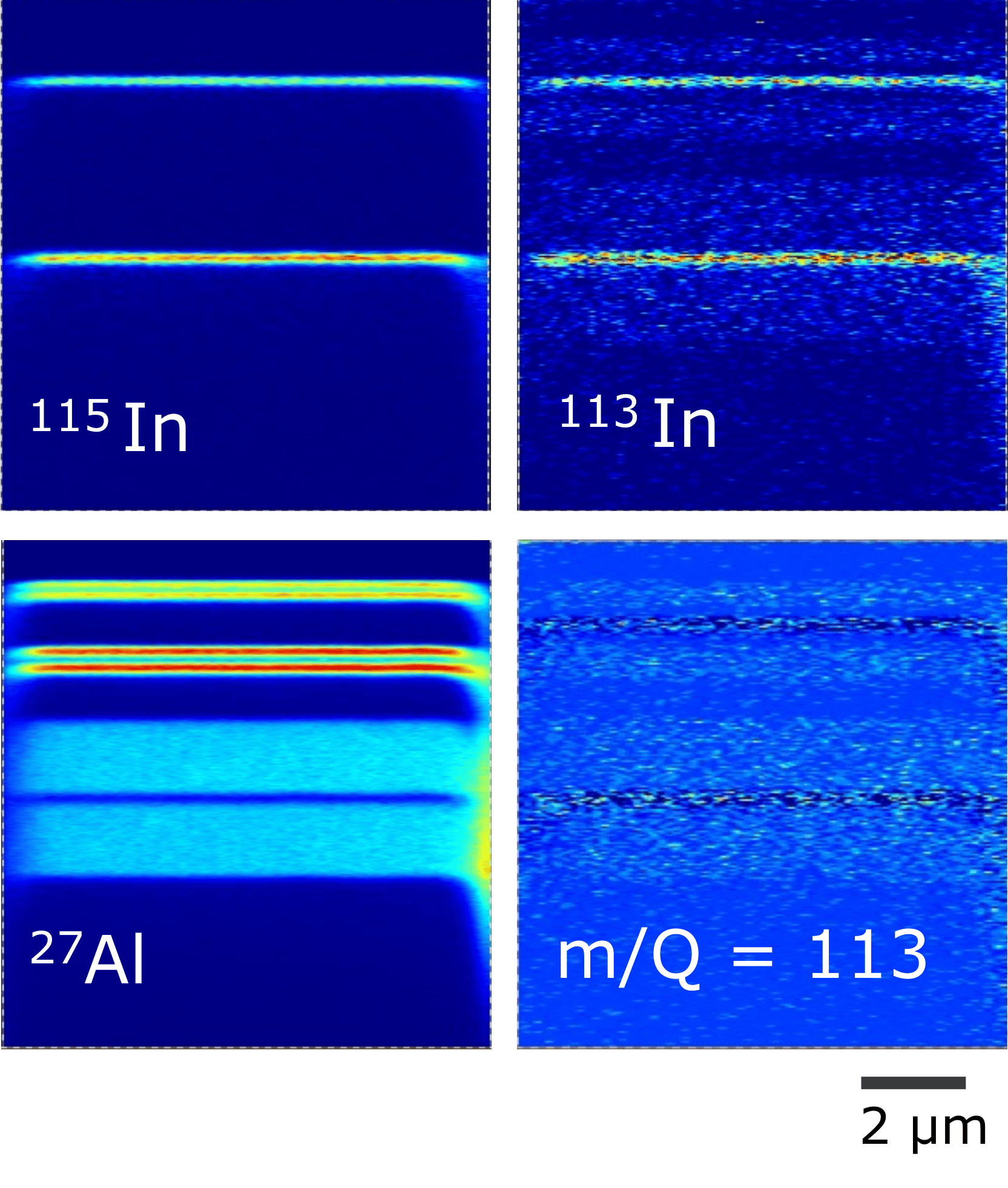
The platform has the flexibility to add expanded data processing tools, like the powerful calculated peak function. This feature allows arithmetic operations directly on mass spectral peaks, for example, combining all isotopes of an element to calculate the total counts per extraction, improving signal-to-noise ratio, or isolating peaks affected by isobaric interferences (Figure 3).
TOFexplorer also has stoichiometry filtering functionalities to facilitate the identification of unknown mass spectral peaks.
Furthermore, it provides user access to raw data and allows users to generate peak data automatically after completion of the acquisition (instead of first subsequently opening the data file with TOFexplorer), which might be advantageous for long-lasting measurements.
Finally, TOFexplorer delivers improved mass peak identification and calibration workflows, streamlining data evaluation and increasing reliability. The software suite also offers a new remote-control interface that eases integration into microscope workflows, making it a flexible solution for advanced FIB-SEM applications.
결론
The next-generation fibTOF provides faster measurement times for increased throughput in FIB-SEM analysis due to higher milling speed and increased data acquisition rates. However, spatial resolution depends on FIB conditions—higher beam currents will increase milling time but may lower spatial resolution.
The advanced electronics, higher-dynamic-range acquisition system, and robust state machine enable faster, more reliable measurements without signal loss. The higher milling speed and an increased rate of data acquisition combined with the versatile TOFexplorer software, provide users with precise control, flexible imaging, and powerful data processing in a single platform. Together, these innovations redefine the capabilities of FIB-SEM analysis, unlocking new possibilities across materials science, semiconductors, and nanotechnology.
