
Role of Microwave Plasma and Nitrogen Partial Pressure on Reactively
Sputtered AlN Films
Hain et al.
Surface & Coatings Technology, 521, 133079, 2026
DOI: 10.1016/j.surfcoat.2025.133079
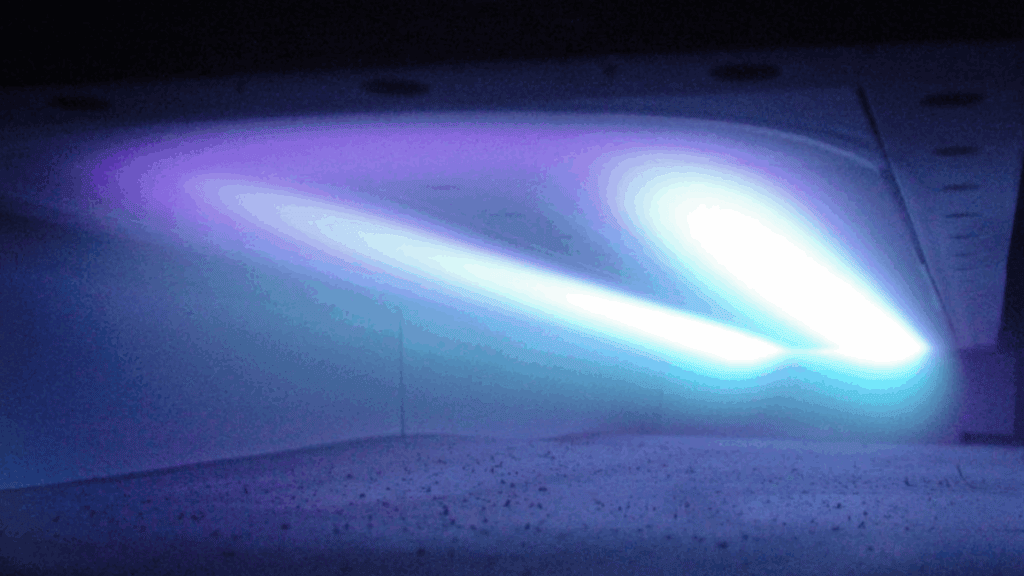
최근 발표된 연구에 따르면Surface & Coatings Technology by researchers from the Laboratory for Mechanics of Materials and Nanostructures, EMPA 및 Thin Film Process Engineering Laboratory of the Tokyo Metropolitan University presents an energy-resolving time-of-flight mass spectrometry (TOFMS) developed by TOFWERK. The energy-resolving TOFMS, along with optical emission spectroscopy and a quartz crystal microbalance, was used to monitor ion fluxes and detect transitions from metallic to poisoned sputtering regimes during AlN film growth. It revealed that magnetrons mainly produced Al⁺ and N⁺ ions, while microwave plasma enhanced Ar⁺ and N₂⁺ generation. This in turn increased nitrogen reactivity and enabled microwave-assisted reactive high power impulse magnetron sputtering (MAR-HiPIMS) to achieve dense, near-stoichiometric AlN films under nitrogen-lean conditions.
This work investigated reactive sputtering for AlN film growth, focusing on the balance between maintaining high deposition rates in the metallic regime and supplying enough reactive nitrogen to form stoichiometric films. Target poisoning and the hysteresis effect, influenced by reactive gas flow and secondary electron emission (γsee), affect sputtering efficiency. Reactive HiPIMS (R-HiPIMS) and its microwave-assisted variant (MAR-HiPIMS) can enhance nitrogen activation. Indeed, the microwave plasma increased N, N⁺, N₂*, and N₂⁺ availability, improving film stoichiometry and reducing oxygen incorporation. Energy-resolving TOFMS, optical emission spectroscopy, and quartz microbalance measurements characterize the deposition environment and ion fluxes.
The energy-resolved TOFMS measurements revealed the temporal evolution and fluxes of key ions (Al⁺, N⁺, N₂⁺, Ar⁺) during direct current magnetron sputtering (DCMS), HiPIMS, and their microwave-assisted variants. This provided real-time insight into the sputtering environment. Under microwave-assisted DCMS (MAR-DCMS), microwave plasma increased N₂⁺ and Ar⁺ fluxes. Al⁺ and N⁺ were partially confined in the magnetron field, producing a post-pulse spike that enhanced substrate delivery. In HiPIMS, energy-resolved TOFMS showed Al⁺ dominance. The microwave plasma markedly boosted N₂⁺ and atomic N fluxes, improving reactive nitrogen availability. These observations clarified why MAR-HiPIMS could achieve dense, near-stoichiometric AlN films at low nitrogen pressures. It links ion flux dynamics, energy distributions, and deposition efficiency to film morphology, density, and stoichiometry.
In summary, energy-resolved TOFMS revealed that MAR-HiPIMS uniquely provides a continuous flux of reactive N⁺ and N₂⁺ ions even at low nitrogen pressures, enabling AlN formation while maintaining metallic sputtering. This ion monitoring explained its superior deposition efficiency and film quality compared to R-DCMS, MAR-DCMS, and R-HiPIMS. These results underline the advantages of MAR-HiPIMS in reactive sputtering processes and the relevance of TOFMS for semiconductor process applications.
