
Atmospheric Emissions of Fe-Containing Nanoparticles from Industrial Activities
Yang et al.
총체적 환경의 과학, 2024
DOI: 10.1016/j.scitotenv.2024.177840
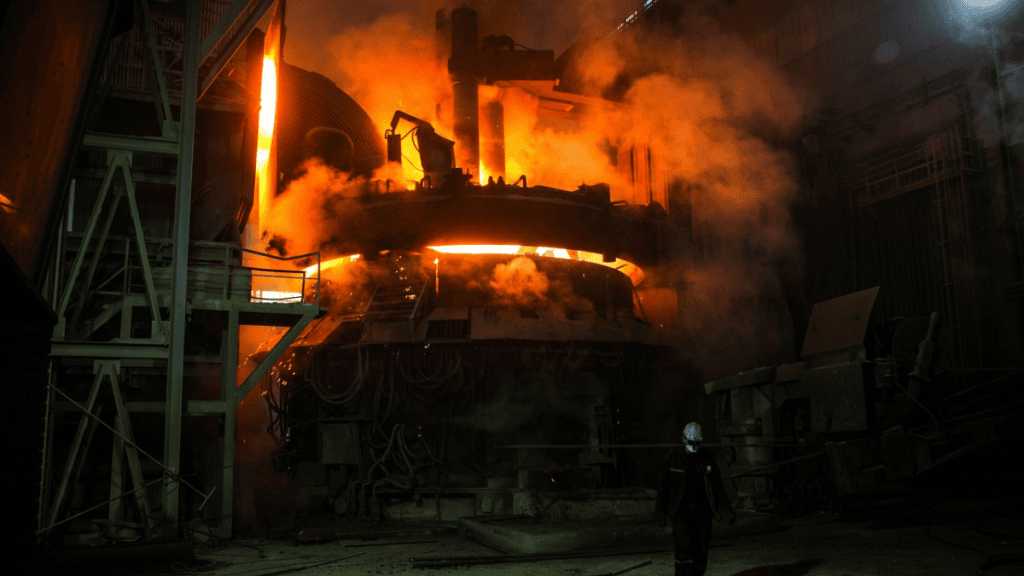
이 게시물의 총체적 환경의 과학, led by researchers from the Chinese Academy of Sciences, employed single-particle ICP-TOFMS with the icpTOF 2R to quantify iron-containing nanoparticle (NP) emissions. The study analyzed emissions from 132 industrial plants across 13 sectors in China, identifying hazardous waste incineration, pig iron production, and electric-arc furnace steelmaking as the primary sources. The annual emission of iron containing NPs was estimated at 1.03 × 10²⁴ particles, highlighting potential health risks and the need for sustainable industrial practices.
Iron containing NPs have been detected in human tissues and linked to neurodegenerative diseases, raising concerns about their sources, primarily industrial air pollution. Industrial activities such as steel production, iron ore sintering, and metal recycling emit significant amounts of iron containing NPs, which can penetrate biological barriers and pose health risks. Despite their impact, existing air quality monitoring struggles to accurately measure NP concentrations. To address this, a large-scale field study analyzed iron containing NP emissions from 132 industrial plants across 13 sectors in China. For this, fine particulate matter (PM) samples from these sites were collected using isokinetic sampling. Samples underwent ultrasonic extraction, sedimentation, and dilution before elemental analysis. Using single-particle ICP-TOFMS, researchers quantified NP concentrations and estimated atmospheric emissions, mapping their spatial distribution nationwide. and analyzed via SP-ICP-TOF-MS.
The researchers found that iron containing NP emissions in China vary significantly across provinces, with nine high-emission provinces—Shandong, Jiangsu, Guangdong, Inner Mongolia, Hebei, Anhui, Zhejiang, Henan, and Shanxi—contributing 53.6% of the total national emissions. Shandong had the highest emissions, followed by Jiangsu and Guangdong, increasing health risks in these regions. Emissions correlate with GDP, highlighting the challenge of balancing economic growth and pollution control. Major sources include steel production, incineration, and high-temperature industrial processes.
The study highlights the urgent need for a comprehensive emissions inventory to assess human exposure, prioritize pollution sources, and develop control strategies. These findings, employing TOFWERK advanced icpTOF technology, are critical for sustainable industrial development and public health protection. Targeted emission reduction strategies, such as improving pollution control in coal-fired power plants, cement kilns, and blast furnaces, are needed. Enhancing filtration systems and adopting cleaner production techniques in high-emission provinces can mitigate health risks while supporting sustainable industrial development.
