
Laboratory Analysis of VOC Emissions from Structural Materials in Wildland−Urban Interface Fires
Dresser et al.
环境科学与技术 2026, Volume 60, Issue 9, pp. 7251-7259
DOI: 10.1021/acs.est.5c11276
最近发表在 Aerosol Research Discussions by researchers from the University of Colorado 和 Colorado State University, used the TOFWERK Vocus 2R to investigates volatile organic compound (VOC) emissions from 18 structural materials relevant to wildland–urban interface fires, providing detailed measurements across flaming and pyrolysis conditions. Using the Vocus, researchers quantified 73 VOCs and identified compound classes and potential fire tracers, such as aromatics, nitriles, and halogen species, highlighting how structural fires differ from biomass burning and how whole-house emissions compare to wood.
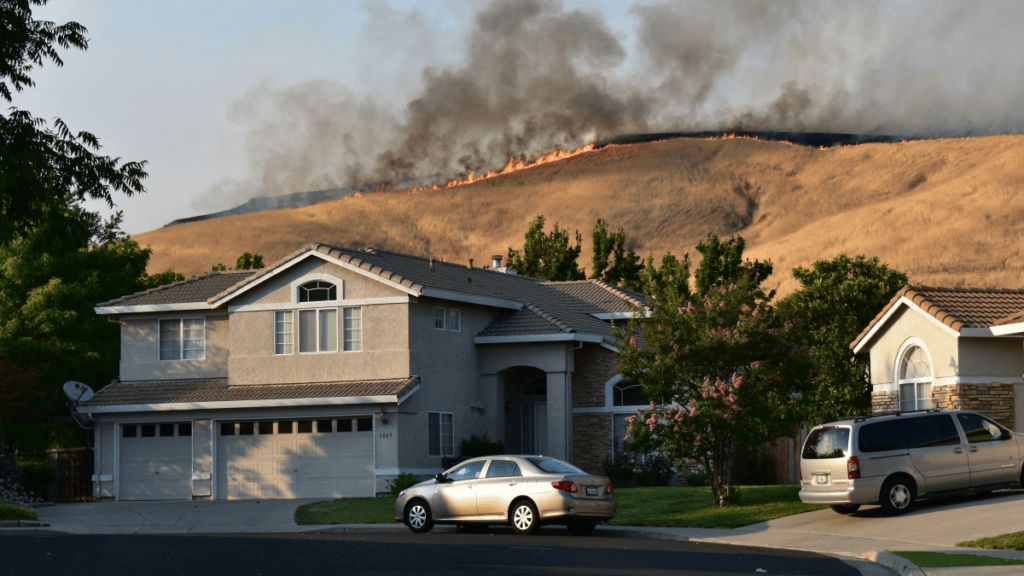
Wildland–urban interface (WUI) areas, where development meets wildlands, have expanded alongside increasing wildfire activity, raising concerns about air quality and toxic emissions from burning structural materials. While biomass fire VOC emissions are well studied, emissions from structural materials are less understood despite evidence that they can produce higher levels of certain pollutants, especially during pyrolysis and flaming combustion.
This study measured VOC emissions from 18 structural materials using laboratory burns, quantifying 73 compounds and comparing them to biomass fires. VOC emissions were measured using a Vocus 2R, enabling real-time detection and quantification of a broad range of VOCs during controlled flaming and pyrolysis burns of structural materials. The Vocus system was calibrated daily, corrected for dilution and background signals, and used to derive emission factors for 73 VOCs, providing high-resolution chemical profiles of structural fire emissions.
Real-time VOC measurements captured rapid emission spikes and strong temporal variability during flaming and pyrolysis of structural materials. The data revealed clear chemical contrasts: biomass-like materials (e.g., Douglas Fir) were dominated by typical combustion tracers, while synthetic materials (e.g., PVC, insulation) produced much higher aromatic, nitrile, and halogenated VOC emissions. Emission factors derived from the time series showed orders-of-magnitude enhancements for plastics and insulation, especially for benzene, PAHs, and chlorinated compounds. The high time resolution also enabled integration over full burn periods, linking dynamic combustion behavior to distinct VOC fingerprints across material classes.
In summary, these results highlight distinct chemical signatures in wildland–urban interface (WUI) fires and identify potential tracer compounds for distinguishing structural burning in atmospheric measurements and field studies. The study also showed that the Vocus system is well suited for capturing the complexity of WUI fire chemistry by enabling rapid, highly sensitive, and broad-spectrum VOC measurements under rapidly changing combustion conditions.
